
How We Work
A method you can follow from enquiry to review
Each stage has an output: a written scope, a briefing, a record or a review. Nothing moves to the next stage until the previous one is agreed.
The method
Five stages
STEP 1
Enquiry
A conversation about the site, the risks you are trying to reduce and the budget range.
STEP 2
Scoping
We send a written proposal: modules or duties, hours, staffing levels and cost.
STEP 3
Agreement
Dates, shift patterns, assessment criteria and reporting lines are confirmed.
STEP 4
Delivery
Training is delivered, or officers are briefed and deployed to your premises.
STEP 5
Review
Outcomes are examined with you and the arrangement adjusted where it needs to be.
Stage by stage
What happens, and what you get
1. Enquiry and scoping
We ask what the site is, who uses it, what the shift pattern looks like and what has prompted the enquiry. Where a simpler answer exists — better lighting, a change of routine, a different supplier — we will say so.
You receive a written proposal listing modules or duties, hours, staffing levels and cost. There is no charge for this stage.
2. Agreement
Once the shape is right, we confirm the detail: dates, session lengths, group sizes, shift patterns, reporting lines and the named contact at each end. Assessment criteria are shared with you before delivery so nothing is assessed against an unstated standard.
3. Delivery or deployment
Training days run to the agreed plan with practice built in. On the contracted side, each officer receives a written site briefing and, where practical, a walk-through before their first shift.
4. Records
Attendance, assessment outcomes, shift records, handovers and reported incidents are all written up. Records go to the named contact and are retained for the period set out in the contract.
5. Review
We review what happened: how learners performed, what the site log shows, and what clients and officers have raised. The arrangement or the module list is adjusted rather than left to drift.
Escalation
If something needs attention, there is a named contact and an agreed route. Urgent matters go to the operations supervisor; commercial and contractual matters go to the account contact. Both are recorded in the contract.
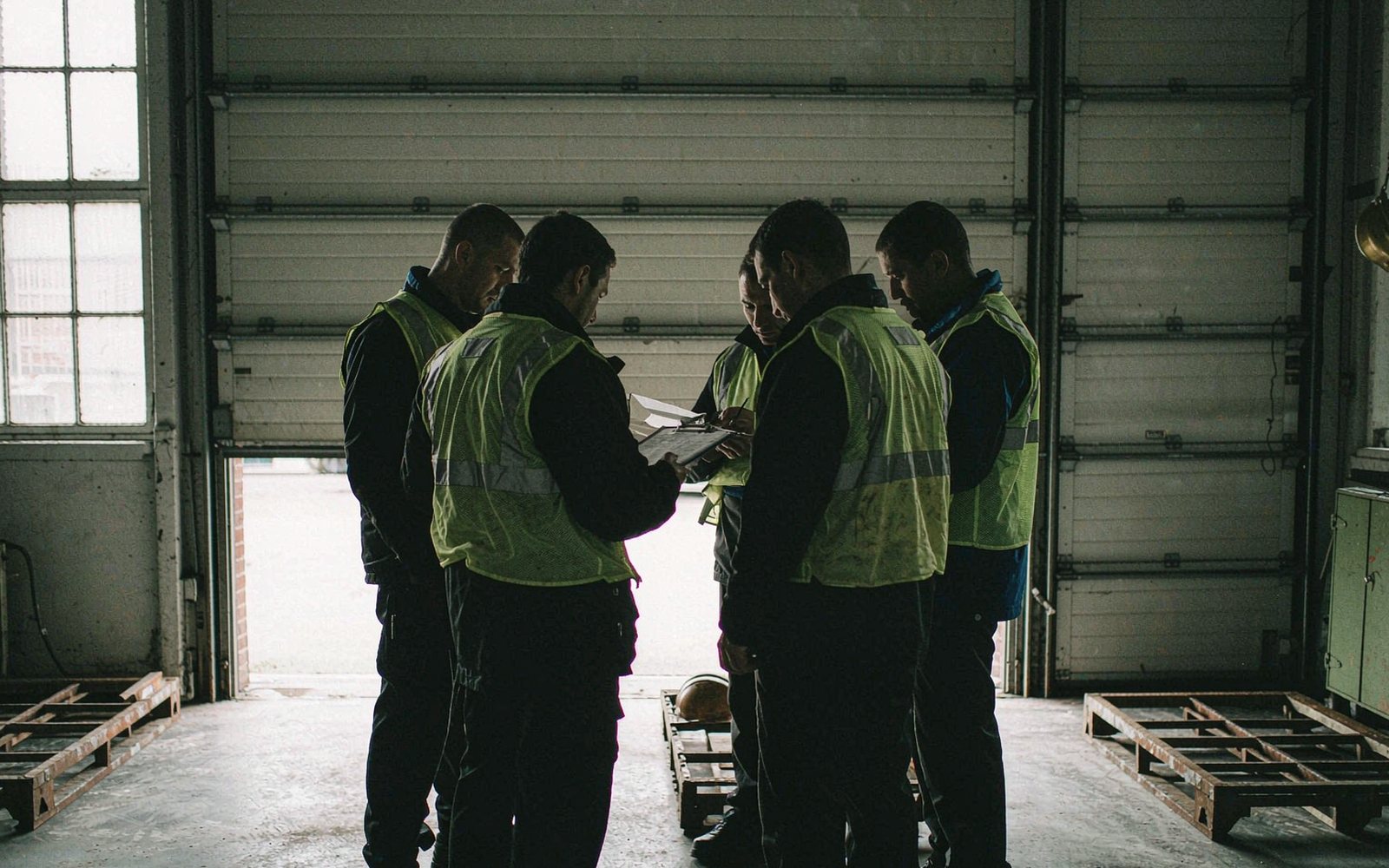
Briefings
The briefing is where an arrangement either holds or fails
A briefing covers the premises, the duties, the timings and the boundaries of the role. It also covers what to escalate, to whom, and how quickly — the part that is most often left to improvisation elsewhere.
Briefings are written down and reviewed whenever the site or the duties change, so a new officer picking up a shift is working from the current version rather than a verbal account.
- Premises layout, access points and routines
- Duties and the boundaries of the role
- Escalation routes and expected timescales
- Reviewed whenever the site changes
Records
What is written down






Reporting
Regular reporting to the client
Shift records
Completed by the officer on duty, covering times, patrols, visitors, incidents and anything unusual. Available to the named contact on request.
Incident reports
Serious or unusual events are reported the same day, with a factual written account and any follow-up action taken on site.
Periodic summaries
At a frequency agreed with you — weekly, monthly or per rotation — we provide a summary of activity, recurring issues and anything that suggests the arrangement needs adjusting.
Talk through how this would work on your site
We are happy to walk through the method, the records and the review cycle before you commit to anything.